

Which service do you need?
Most calls fall into one of three situations. If the tank is simply due, because a year has passed or a contractor told you so last time, you need emptying. If drains are slow, toilets gurgle or the ground near the tank is wet, you may need emptying, but the cause can also be a blocked outlet or a failing drainage field, so ask for an assessment rather than booking repeat empties. If you have a treatment plant with an alarm, a quiet air pump or a smell from the vents, you need a service engineer rather than a tanker.
Bigger jobs come with their own checks. Replacing a tank or building a new drainage field needs building regulations approval, a percolation test and a design that meets the distances in Approved Document H. A survey is worth booking before you buy a house with private drainage, because the seller's description may not match what is in the ground.
How the six services connect
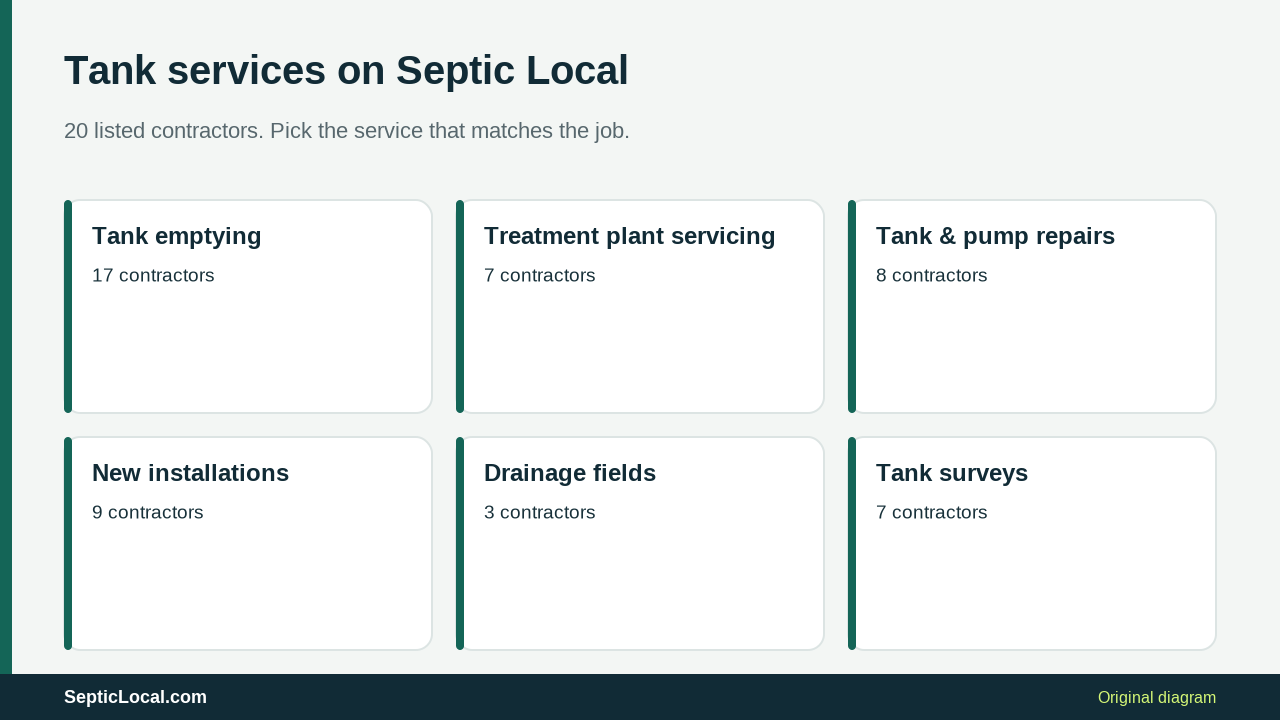
Emptying and servicing keep a system running. Repairs fix pumps, pipes, lids and tanks when something breaks. Drainage field work deals with the part of the system you cannot see, where treated liquid soaks away. Installation replaces a system that cannot be repaired or no longer meets the rules, such as a septic tank discharging straight to a stream in England. Surveys tell you which of these you are likely to need next.
Each service page lists the contractors that advertise that work, the questions worth asking and the official rules behind it.