

The short answer
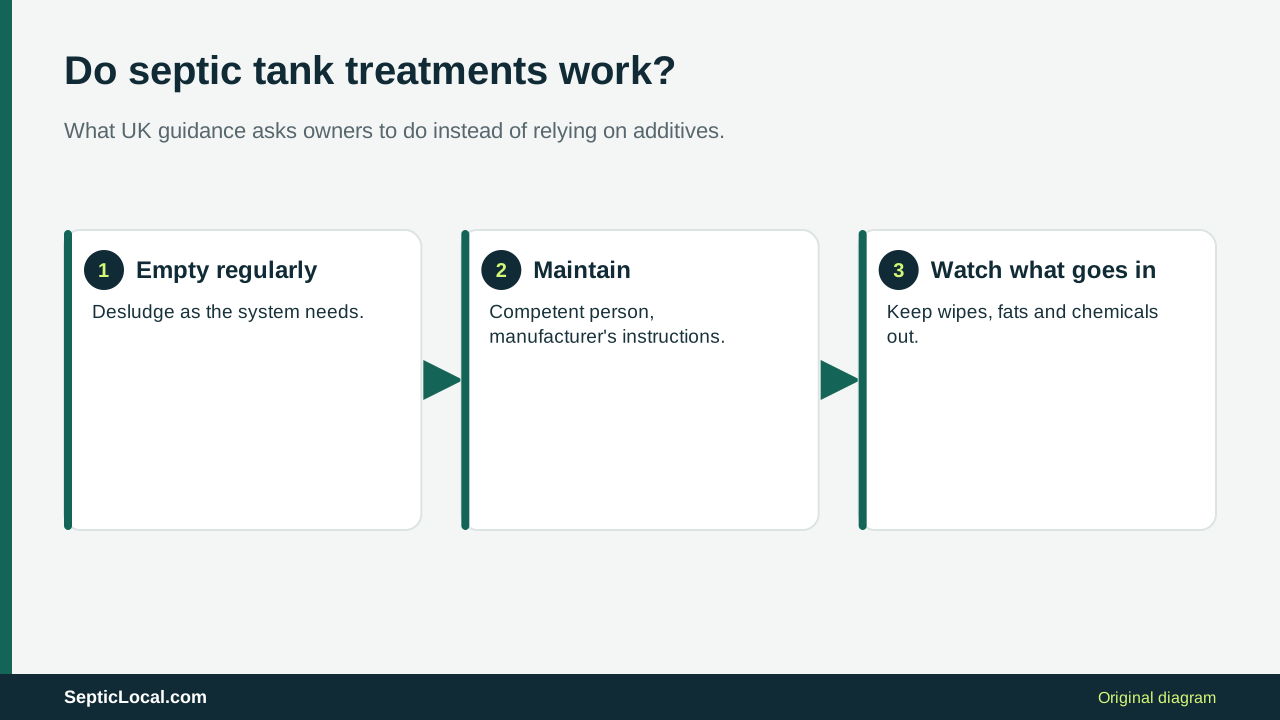
A healthy septic tank does not normally need anything added. UK guidance asks owners to have the sludge removed regularly and the system maintained, not to use additives. Industry firm CSG says a healthy system already has the micro-organisms it needs, and warns you may do more harm than good by adding substances. No treatment replaces emptying.
What treatments claim
Products sold as septic tank treatments, bacteria tablets, enzyme packs or tank cleaners usually claim to break down waste, cut smells, unblock drains and reduce how often the tank needs emptying. CSG reports suppliers' claims that their products are organic and will not harm existing bacteria. Those are the sellers' claims, not independent findings.
What the evidence says
CSG cites researchers who say septic tanks do not need added bacteria. It explains that in the UK's moderate climate, breakdown in the tank is slow, so a septic tank works mainly as a settling tank, where physical processes matter more than biology. Adding bacteria does not change that much.
The CSG article dates from 2015 and does not name the studies it relies on, so treat it as an informed industry view rather than proof. We have not found UK regulator guidance recommending additives.
What UK guidance actually asks you to do
In England, GOV.UK guidance says you must have the sludge removed, at least once a year or in line with the manufacturer's instructions, and have the system maintained by someone competent. In Wales, Natural Resources Wales says desludging must only be done by an authorised person and most package treatment plants need servicing every 12 months. None of this mentions additives.
Why people reach for them, and what to do instead
| The problem | What a treatment cannot fix | What to do |
|---|---|---|
| Smells | A full tank, damaged cover, blocked vent or plant fault | See sewage smells |
| Slow drains, gurgling | A full tank or blocked pipe | Book an empty |
| Wet ground, pooling water | A failing drainage field | Drainage field help |
| Treatment plant alarm | An air pump or pump fault | See air pump problems |
The cost question
Treatments are an ongoing cost, and you still need the tank emptied. CSG put typical additive spending at around £30 to £50 a year in 2015, on top of emptying. Prices will have changed, but the point stands: the money is usually better spent on regular emptying and fixing any real fault.
If you still want to use one
- Check your tank or treatment plant manual first. Some manufacturers give advice on additives for their own systems.
- Ask your emptying contractor or service engineer what they recommend for your system.
- Never use a product as a reason to delay emptying or ignore warning signs.
- Look after what goes down the drain. See what is safe to put in a septic tank.
Common questions
Will a treatment stop my septic tank smelling?
Not if something is wrong. Smells usually come from a full tank, a damaged cover, a blocked vent, a failing drainage field or a treatment plant fault. Find the cause first. See our guide to sewage smells.
Can a treatment mean I empty my tank less often?
Do not rely on it. In England, GOV.UK guidance says sludge should be removed at least once a year or in line with the manufacturer's instructions, whatever products you use.
Do bacteria tablets help a sewage treatment plant?
A treatment plant is designed to grow its own bacteria, fed with air by its blower. If it is not working, the cause is usually mechanical or electrical. Check your manual and ask your service engineer before adding anything.
Sources and further reading
- CSG: does adding substances to your sewage system work? (2015)
- GOV.UK: general binding rules, discharge to the ground (England)
- Natural Resources Wales: small sewage discharge guidance (PDF)
- Environment Agency septic tank guidance (PDF, hosted by Blagdon Estate)
Sources checked 12 October 2026. Rules and guidance can change, so check the source before acting.
Your next step
Septic tank emptying · Treatment plant servicing · Find a contractor