

The short answer
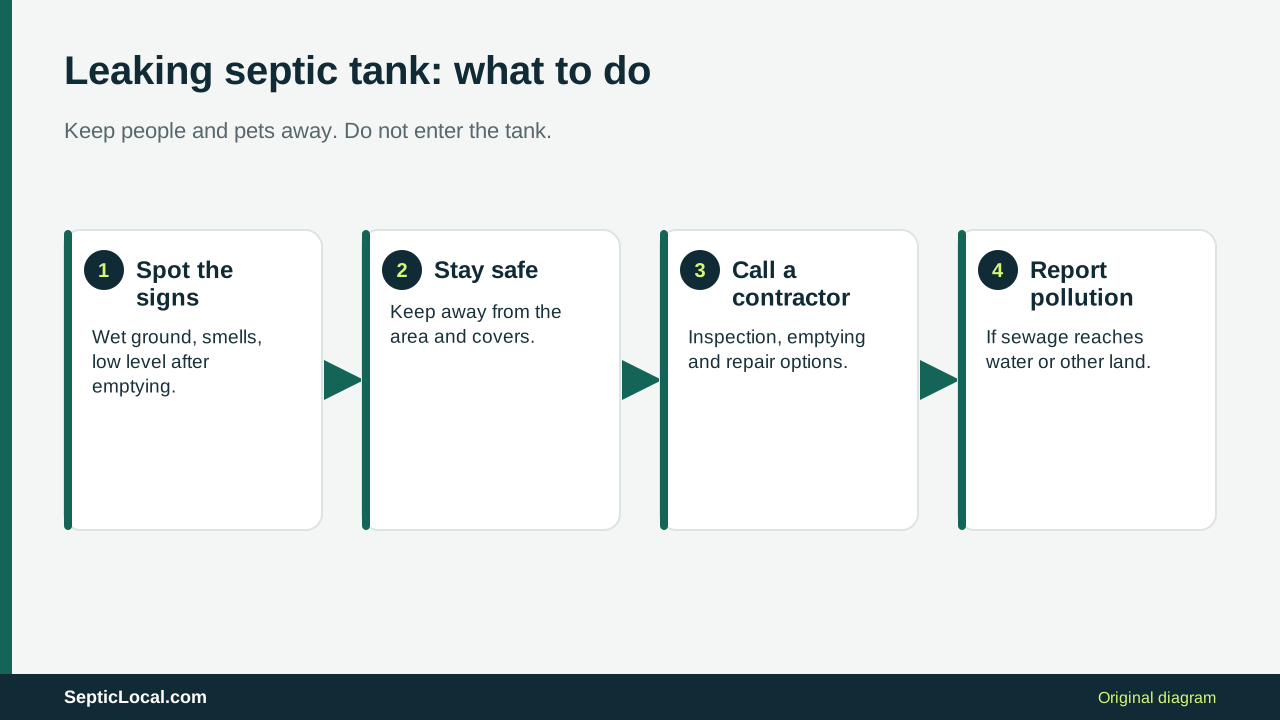
Wet ground, sewage smells or unusually green grass around the tank or pipes can mean a leak. Keep people and pets away and get a contractor to inspect it, usually after emptying the tank. In England, GOV.UK guidance says you must have a system repaired or replaced if it is not in good working order. If a neighbour's tank is leaking onto your land, talk to them first, then go to the council or the Environment Agency if it is not resolved.
Signs of a leaking tank
- Damp or boggy ground, or standing water, around the tank or along the pipe routes
- A sewage smell near the tank when it is not being emptied
- A patch of lusher grass that does not match the drainage field
- Liquid around the outlet pipe or inspection chamber
- A tank that fills much faster after rain. This can mean groundwater is getting in through cracks, which overloads the system.
Some of these signs can also point to a failing drainage field. A contractor can tell the difference. See drainage fields.
Can a leaking septic tank be repaired?
Sometimes. It depends on where the leak is, what the tank is made of and its overall condition. The contractor will usually need to empty the tank to inspect it. Leaks at pipe joints, inlets and outlets are often repairable. A badly cracked or collapsed tank may need replacing. Ask for the options, what each involves and the cost in writing before agreeing to work.
Replacement can bring extra rules to follow, so ask the contractor which permissions or checks apply to your property.
Your legal duties
In England, GOV.UK says the operator must have the treatment system repaired or replaced if it is not in good working order, and gives pools of water around the drainage point as an example of a problem. If a septic tank discharges straight into a stream or ditch, separate rules require it to be upgraded. Wales, Scotland and Northern Ireland have their own regulators: NRW, SEPA and NIEA.
If sewage is reaching water or someone else's land
Report pollution. In England, use the GOV.UK report an environmental problem service. The Environment Agency's 24-hour incident hotline is 0800 80 70 60 for pollution to land, and water pollution has its own online form. The same page links to the reporting services in Wales, Scotland and Northern Ireland.
When it is your neighbour's tank
- Talk to them. They may not know. Explain what you have seen and where.
- Keep a record. Note dates, take photos of wet ground or overflow, and note any smells.
- Check whether the system is shared. Your deeds may show a shared tank or rights of access. If so, both households may share responsibility and cost.
- Contact the council. Councils must investigate complaints about possible statutory nuisances, so your local environmental health team can look into it.
- Report pollution if sewage is reaching a watercourse or spreading across land (see above).
- Get legal advice if the problem continues or there is damage to your property.
Keep safe
Keep children and pets away from wet sewage or overflowing covers. Never lift heavy covers or go into a tank or chamber: the HSE warns that confined spaces can contain dangerous gases.
Common questions
How much does it cost to fix a leaking septic tank?
It depends on the cause and the fix. Emptying before inspection, a camera survey, digging, the parts or tank needed, access for machinery and putting the ground back all change the cost. Get the options in writing and compare like for like.
Can I keep using the toilet if my tank is leaking?
Cut water use as much as you can until a contractor has inspected it, and keep everyone away from any wet or overflowing area. Every extra load of water adds to what may be escaping.
Is a leaking septic tank an emergency?
It is urgent if sewage is reaching a watercourse, spreading across land or backing up into the house. Report pollution through the GOV.UK report an environmental problem service and get a contractor out. A small damp patch still needs checking, but usually as a booked visit.
Groundwater is getting into my tank. Is that a leak too?
Yes. If the tank fills unusually fast after rain, water may be getting in through cracks or joints. It overloads the system and can push solids out to the drainage field, so it needs the same inspection.
Sources and further reading
- GOV.UK: general binding rules, discharge to the ground (England)
- GOV.UK: general binding rules, discharge to surface water (England)
- GOV.UK: report an environmental problem
- GOV.UK: statutory nuisances, how councils deal with complaints
- Natural Resources Wales guidance (PDF)
- SEPA: septic tanks (Scotland)
- DAERA: septic tank consents (Northern Ireland)
- HSE: confined spaces
Sources checked 12 October 2026. Rules and guidance can change, so check the source before acting.
Your next step
Septic tank repairs · Septic tank surveys · Find a contractor