

The short answer
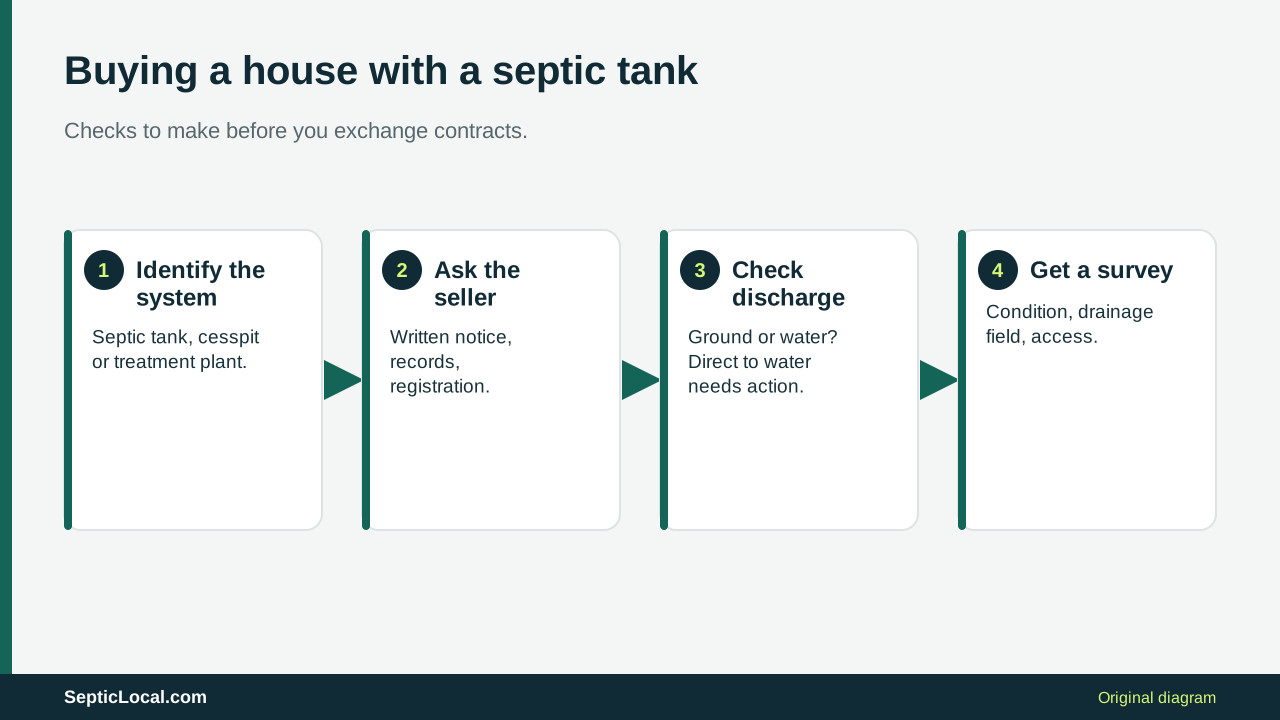
Find out what kind of system the house has, where everything is and where it discharges. Ask for the maintenance and emptying records. Check it meets the rules for that part of the UK, and get it surveyed before you exchange. In England, a septic tank that discharges straight into a stream or ditch has to be upgraded, so agree with the seller who pays for that before you commit.
This guide explains what to look for. It is not legal advice. Your conveyancer should confirm the position for the property you are buying.
Work out which system it is
Off-mains properties usually have one of three systems:
- Septic tank. Separates solids and sends liquid out to a drainage field or soakaway.
- Sewage treatment plant. Treats the waste further, usually with electrically powered parts that need servicing.
- Cesspit or cesspool. A sealed holding tank with no outlet, which needs emptying regularly.
Each one has different running costs and rules. Our guide to septic tanks, cesspits and treatment plants explains the differences.
What the seller has to tell you
England. GOV.UK guidance says that when a property is sold, the seller must tell the new operator in writing that a sewage discharge is in place. That should include a description of the treatment and drainage system, the locations of the main parts and the discharge point, any changes made to the system, how it should be maintained, and maintenance records if they are available.
Wales. Natural Resources Wales guidance says the occupier must pass written details of the discharge and the maintenance records to the next occupier when they leave or sell. NRW does not need to be told about a change of ownership.
Scotland. Properties that cannot connect to the public sewer need an authorisation from SEPA to discharge. SEPA has an online check to see whether a discharge is already registered. Ask the seller for the registration details and ask your solicitor to confirm it.
Northern Ireland. DAERA says septic tank systems need a consent to discharge from the Northern Ireland Environment Agency. Ask the seller for a copy.
The big one in England: tanks that discharge to water
If a septic tank in England discharges directly into a watercourse, such as a stream, river or ditch, GOV.UK says the operator must do one of the following as soon as possible:
- connect to the public foul sewer
- replace the septic tank with a small sewage treatment plant
- install a drainage field so the tank discharges to the ground instead
The guidance says plans should be in place to do this within a reasonable timescale, usually 12 months. It also says the buyer and seller should agree who is responsible for the work, as a condition of sale.
This can be expensive and is worth knowing before you agree a price. If the seller cannot say where the tank discharges, find out before exchange.
Questions to ask the seller
- What type of system is it, and who made it if it is a treatment plant?
- Where are the tank, the drainage field or soakaway, and the discharge point?
- When was it last emptied, and by whom? Can I see the records?
- When was it last serviced?
- Has it ever been changed, extended or repaired?
- Is it shared with any other properties? If so, who pays for what?
- Is any part of it on someone else's land?
- Has it had problems such as smells, slow drains or wet ground?
- In Scotland or Northern Ireland, is it registered or consented, and can I see the paperwork?
Get a survey before you exchange
A standard homebuyer survey may not cover the drainage system in any depth. A specialist survey gives you facts to negotiate with. Ask any surveyor or contractor what their survey includes, as this varies. It may cover:
- the condition of the tank or plant
- whether it was emptied so the inside could be checked
- a camera inspection of the pipes
- whether the drainage field or soakaway is working
- where the system discharges
- whether it appears to meet the current rules
Ask for a written report you can share with your solicitor and lender. Find septic tank and drainage surveys near you.
Shared systems and neighbours' land
Some tanks serve more than one house, and some sit on land owned by someone else. Before you buy, your conveyancer should check who owns it, your rights to reach it for emptying and repairs, and how costs are shared. Check that a tanker can actually get to it, too. A written agreement between the households helps avoid arguments later.
Running costs to plan for
Budget for regular emptying and, for a treatment plant, servicing and electricity. Natural Resources Wales guidance says most package treatment plants need professional servicing every 12 months. In England, GOV.UK says sludge should be removed at least once a year or in line with the manufacturer's instructions. Ask local contractors for quotes based on the actual system, as costs depend on tank size, access and distance.
Warning signs during a viewing
- Wet or boggy ground, or unusually green grass, over the drainage area
- Sewage smells outside
- A pipe running into a ditch or stream
- No records of emptying or servicing
- A tank cover under a new extension, patio or driveway
- A treatment plant that is switched off or alarming
Our guide to the signs a septic tank is full covers what these symptoms can mean.
After you move in
Keep every invoice, waste transfer note and service report together, because you will need them when you sell. Set a reminder for the next empty or service. Use a contractor who is a registered waste carrier, and look after the drainage area by not parking or building over it.
Sources and further reading
- GOV.UK: general binding rules, small sewage discharge to surface water (England)
- GOV.UK: general binding rules, small sewage discharge to the ground (England)
- Natural Resources Wales: guidance for registering small sewage discharges (PDF)
- SEPA: septic tanks and private sewage treatment systems (Scotland)
- DAERA: septic tank discharge consents (Northern Ireland)
Sources checked 9 October 2026. Rules and guidance can change, so check the source before acting.